
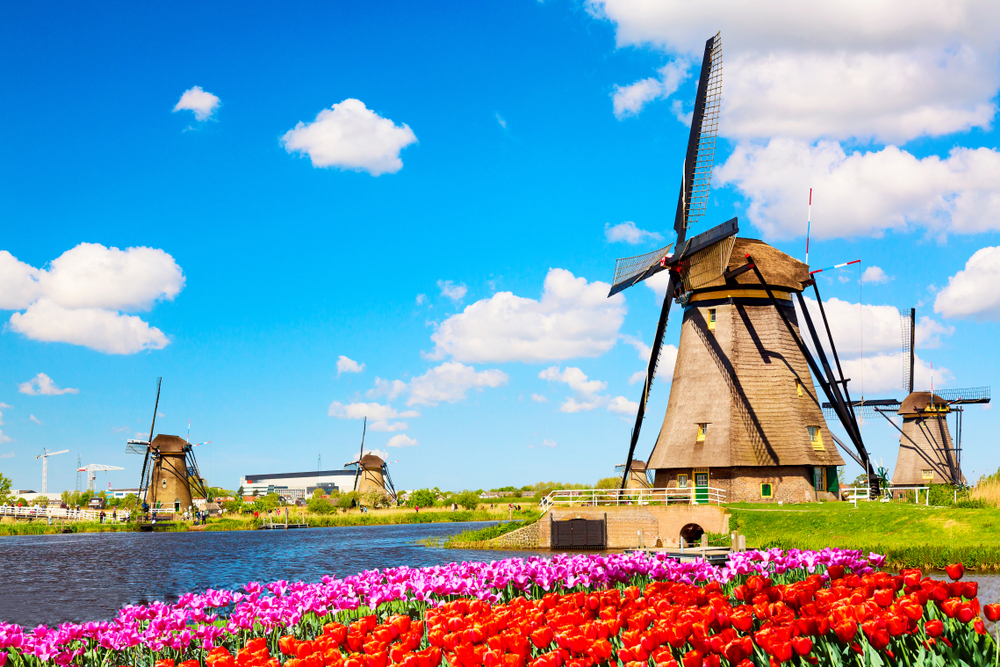
Most Dutch windmills have stood still since the 1960s. Their spinning with the breeze seems to calm a person as their blades all turn in unison. Most of the windmills once pumped water. In the 18th century, they were operated by skilled millers.
Now, in the Dutch province of North Holland, millers at Kijkduin Windmills are bringing them back to life. The reason for this is the country’s flour industry. Few of the countries 1,000 or less remaining windmills were ever used to grind flour. Instead, most of them worked as an irrigation system spread through the low-lying areas of the country. Today some of them continue to function as backups in case the Dutch water management systems run into trouble and need some assistance.
Located in the village of Schoorl, the Kijkduin Windmill is one of the oldest grain refinement mills in the country. It was built in 1772. It has had its ups and downs through the years. Following World War ll, after a number of restorations, the windmill officially opened the doors in 2017 to the public. This created a new era for the mill.

Visitors are invited to check out the windmill’s flour operation on Saturdays. They are also invited to purchase a variety of the various flour it produces. This includes the nutrient-rich artisanal wholemeal flour. Many of the shops and local bakers use the flour. They bake it and create delicious wholemeal wheat bread as well as other goodies.
Artisan bread is often described by the person who makes the bread. He is an artisan baker – a craftsperson specially trained to the highest level to mix, ferment, shape, and then bake a handcrafted loaf of bread.

It is not easy to produce wholemeal flour by a windmill. It needs to have an extraction rate as near to 100 percent as possible. This means that the millers need to use every part of the grain while it is being milled. With the advent of industrialized flour-making technology, during the 19th century, there has been a steady decline of people with the experience to make artisanal wholemeal flour. Today there are only about 40 millers who are professionals in the art of making the specialty.
In order to increase this number, Dutch millers, similar to those at Kijkduin, are working hard to change this. They are training volunteers on how to mill. UNESCO has even bestowed the craft a special reward; in 2017, they placed the craftsman on a special list.