
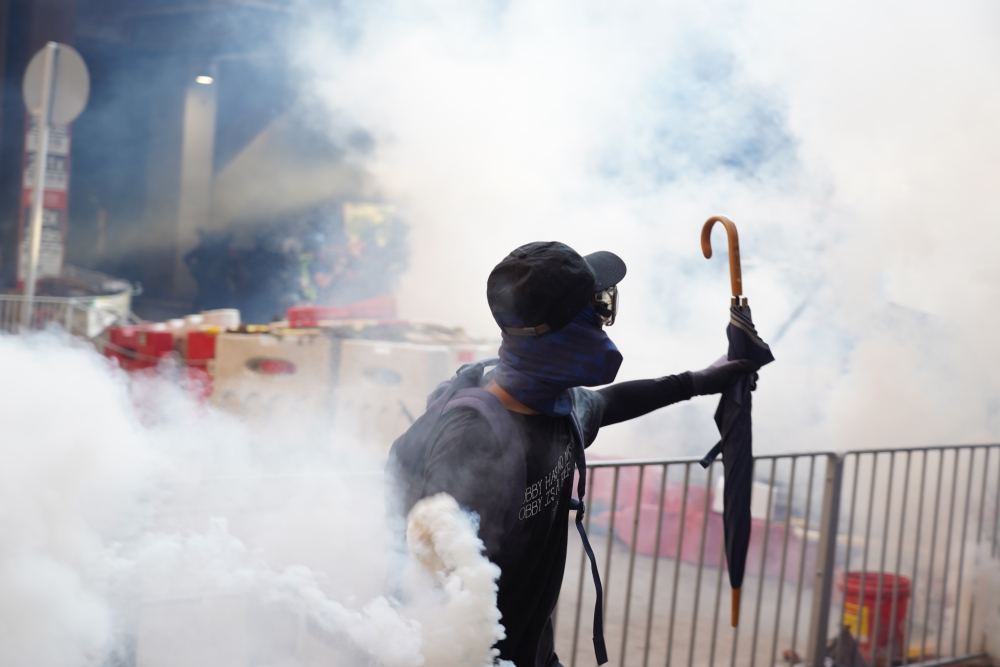
Lachrymatory agents, better known as tear gas, refers to different chemical compounds. They cause the eyes to tear as well as suffer from pain. Sometimes people have temporary blindness. The most common use of tear gas is that it is used as an agent for riot control as well as a chemical weapon. It can also be used for self-defense.
When a person receives tear gas, it causes irritation to the mucous membranes of the lungs, mouth, nose, and eyes. This irritation is usually caused by a chemical reaction with a group of enzymes known as sulfhydryl. This often causes a person to tear, sneeze, and cough. Although some of the agents are toxic, tear gas is usually non-lethal.
The chemicals result in causing a severe burning sensation when it comes in contact with the skin. The sensory nerves alert the brain, telling it to remove the compound from your skin before it causes you physical harm. Exposure can cause chemical burns and rashes. When the chemicals strike the eye, the sensory nerves once again send a signal to your brain stem. In turn, they send hormones to tear glands in the eyelids. These glands then pump out and produce a salty wash of oil, mucus, water, and protein to assist in ridding of the irritants as fast as possible.
Similar defenses go to work in the nose and respiratory system. A person suffers from flowing mucus and a significant hacking cough. This is all an attempt for the body to rid of the irritant. This is when one begins having feelings of nausea and vomiting may follow.
Ironically, the agents of tear gas are not usually gases. Most of the compounds are solids at room temperature. The tear gas is suspended in a solution and then sprayed as aerosols or grenades. Different types of compounds can be used as tear gas. However, they generally share the structural element Z=C-C-X. The Z denotes oxygen or carbon. The X is chloride or Bromide.
While tear gas usually does not cause death, it can cause permanent damage to some people. People can have blindness, respiratory problems, or burned skin. If a child is a victim and inhales a large amount of tear gas, it may cause damage to the lining of his/her respiratory tracts. This will cause a child to be unable to take deep breaths.
Tear gas, when used to control crowds due to possible rioting, is often contained in a silver canister. Once it hits its target white fumes start to billow upward, similar to smoke. People often begin crying while others shriek and wail. They attempt to move about, but, due to their temporary blindness, they do not get very far. They cough and frantically rub their eyes. Others begin to vomit. Most often, a person suffers from tear gas for about an hour.
If you are a victim of tear gas, you will want to move away from the area as quickly as possible. If you are inside a building, you should go outside and breathe the fresh air. The less exposure you face, the better off you will be.